

Warning! This blog contains content that may be graphic to those with a disdain for Bugs!
Spotting silverfish in Yuba City can be unsettling—fast, slippery-looking insects that vanish the moment the lights come on. The good news is silverfish aren’t aggressive pests, but they can still cause real damage to paper goods, textiles, and pantry items when conditions are right.
This article covers the “what and why” of silverfish: what they are, where they live, what they eat, and how to recognize activity early.
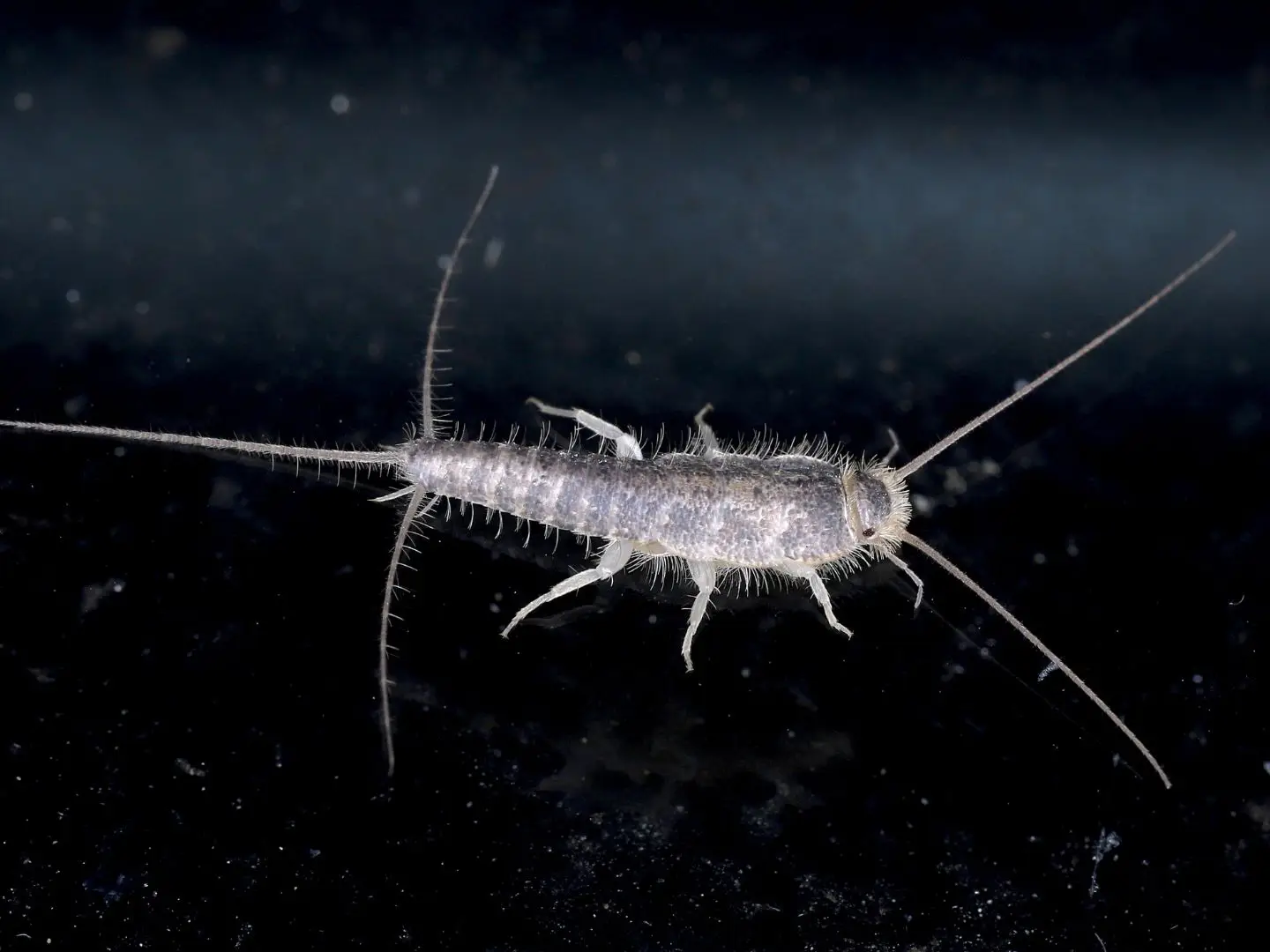
Silverfish are small, wingless insects in the order Zygentoma. They’re considered primitive insects and have remained largely unchanged for a very long time.
Integrated overview (using the provided site-consistent details):
Appearance: Silverfish have an elongated, teardrop-shaped body covered in silvery-gray scales. Many are about 12–19 mm (0.5–0.75 inches) long, with three long, bristle-like appendages at the end of the abdomen.
Movement: They make quick, wriggling movements—one reason they’re called “silverfish.”
Nocturnal: Silverfish are most active at night and prefer hiding during the day.
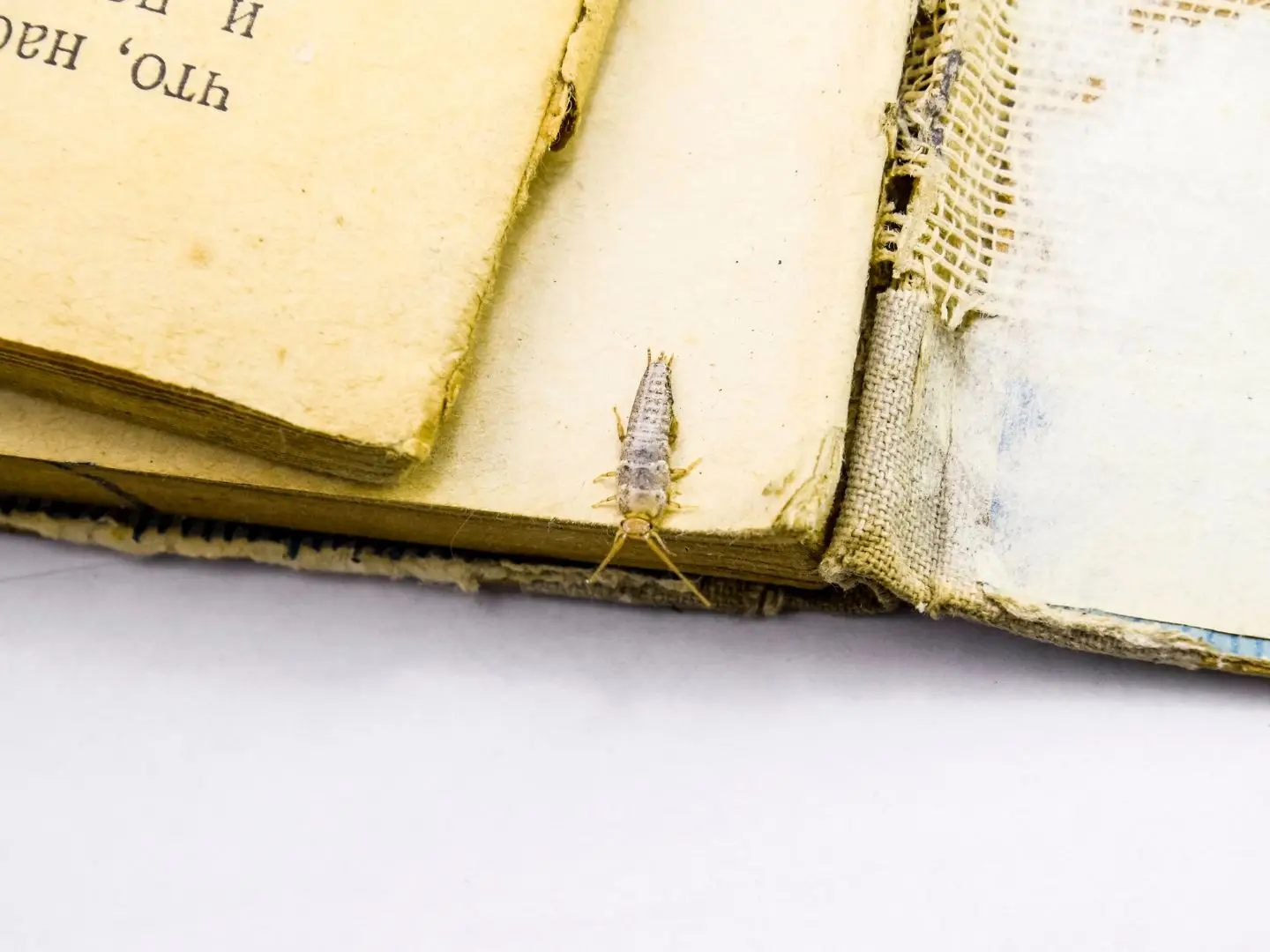
Diet: They feed on materials containing starches, sugars, and cellulose, which can include book bindings, paper, wallpaper paste, and some textiles.
Habitat: They prefer dark, damp, humid areas—common in bathrooms, kitchens, basements, attics, under sinks, behind baseboards, and inside wall voids.
Silverfish are not known to bite humans and are not typically considered a direct health threat. The main concern is property damage and nuisance-level contamination, especially in pantries and storage areas.
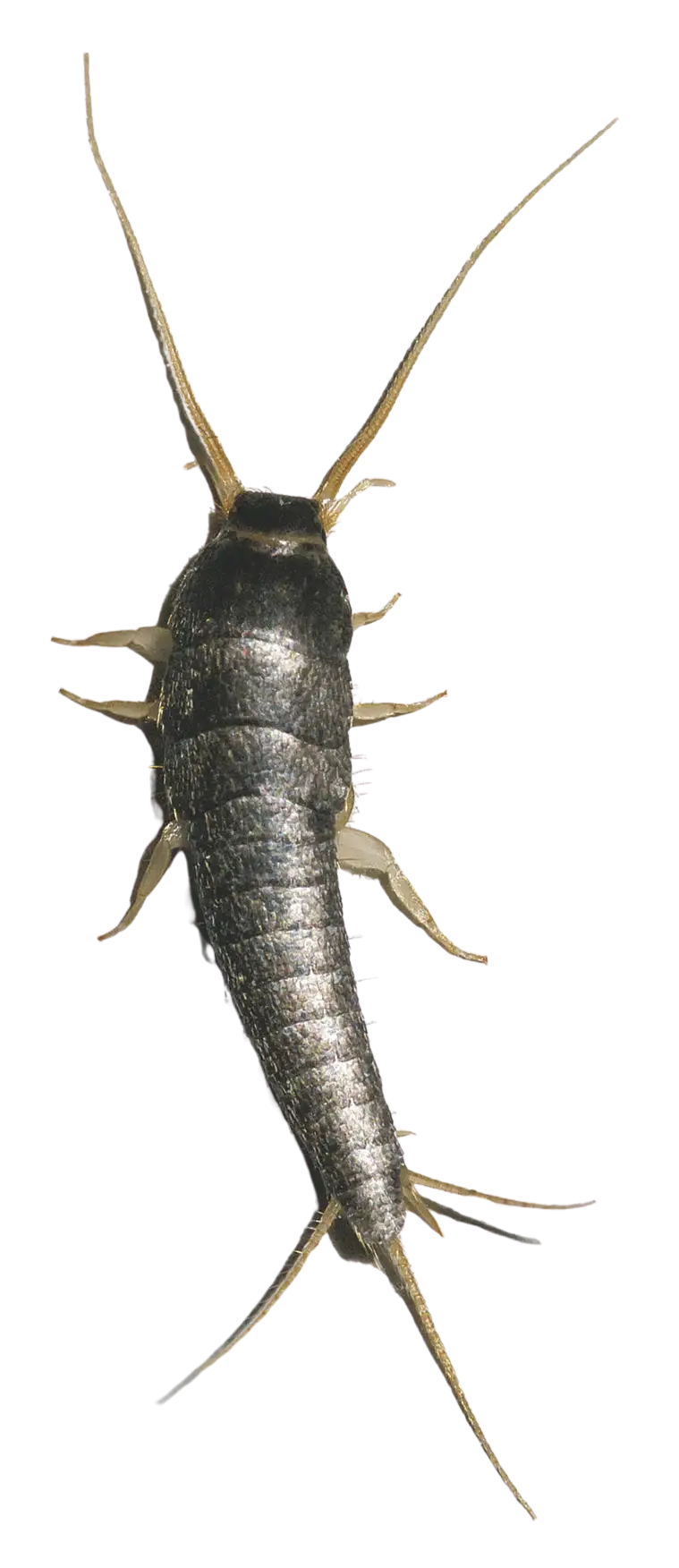
Silverfish activity usually increases when three conditions overlap:
Silverfish need higher humidity than many household insects, so damp spaces and poor ventilation can make a home more inviting.
They can feed on starches and cellulose in everyday materials such as:
Cardboard and paper storage
Books, magazines, and files
Wallpaper paste and certain adhesives
Stored fabrics and textiles (especially in damp closets)
Cluttered, dark storage—especially near bathrooms, laundry rooms, or basements—creates ideal hiding spots and protection from light.
Silverfish are commonly found in:
Bathrooms (baseboards, vanity voids, behind toilets)
Kitchens (under sinks, behind refrigerators/dishwashers)
Laundry rooms (near moisture and stored paper products)
Basements/crawlspaces (especially where humidity stays elevated)
Attics (when ventilation is poor or insulation traps moisture)
Family-owned, licensed & bonded | 35+ years of experience | Emergency service available | Saturday appointments
Because silverfish are nocturnal and avoid light, the signs are often subtle:
Seeing silverfish at night (especially after turning on lights)
Irregular feeding damage on paper goods, book edges, wallpaper, or stored fabrics
Activity in multiple rooms that share moisture (bathroom → closet → hallway)
Silverfish problems often continue when only visible insects are treated. Long-term improvement usually requires addressing the underlying conditions—especially humidity, entry/harborage zones, and food sources—which is consistent with an Integrated Pest Management (IPM) approach.
New customers: Ask about our 50% off first regular service promotion.
Hours: Mon–Fri 8:00 am–5:00 pm; Sat 8:00 am–1:00 pm by appointment.
If silverfish are showing up regularly in more than one room, or if you’re noticing damage to stored items, a professional inspection can help pinpoint the moisture source and hidden harborages (wall voids, attic spaces, under-sink cavities, crawlspace conditions).
We proudly serve Yuba City, Marysville, Wheatland, Plumas Lake, Lincoln, Loomis, Rocklin, Auburn, Live Oak, Gridley, Oroville, Grass Valley, Sutter, Meridian, Colusa, Sheridan, Pleasant Grove, and surrounding areas.
Call now:
Yuba City: (530) 673-6322
Auburn: (530) 878-0282
Roseville: (916) 218-1030
Grass Valley: (530) 272-7028
Lincoln: (916) 434-8831
Or request a Free Estimate via the website.
Read through and want to know how to get rid of silverfish? Here’s an in-depth guide on how to DIY and when to call Cal King : How to Get Rid of Silverfish in Yuba City—When to Call a Pro